
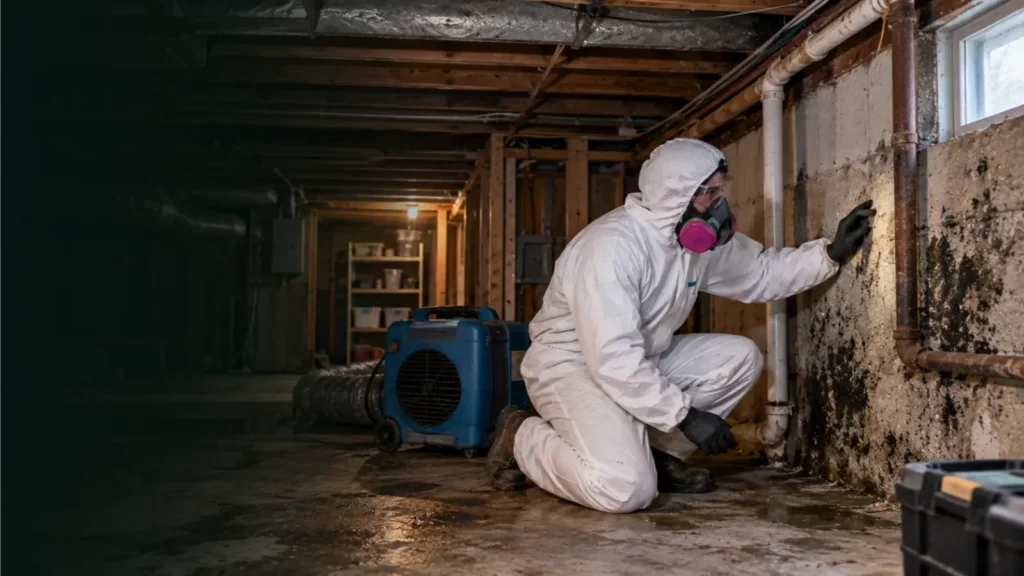
Basement & Crawl Space Service
Basement and Crawl Space Mold Removal in Inwood, NY
Basement and crawl space mold often develops due to water leaks, flooding, foundation moisture, or high humidity. In Inwood, coastal weather and drainage issues can make moisture problems more common. Effective mold removal involves identifying the moisture source, treating affected materials, and preventing future mold growth.
Serving Inwood and the Five Towns
Same day response when available
Local moisture conditions
Why Inwood Basements and Crawl Spaces Can Be Prone to Moisture Problems
Basement Crawl Space Mold Removal Inwood is especially relevant because Inwood sits along Jamaica Bay in the Town of Hempstead, and its South Shore location means some properties can be exposed to coastal storms, heavy rainfall, flooding, drainage problems, and periods of high humidity. Those conditions can contribute to moisture entering basements and crawl spaces.
Older homes can also have aging plumbing, drainage systems, foundation materials, or sump pump equipment that may contribute to water intrusion when problems develop. Block and masonry foundation walls can allow moisture to move through or around the structure under certain conditions, while condensation can develop when warm, humid air meets cooler basement walls or pipes.
A basement or crawl space can become a consistent source of excess moisture even when the homeowner has not experienced a major visible flood. Finding the actual moisture source is an important part of determining the appropriate next step.

Root causes
Common Causes of Basement and Crawl Space Mold
Mold in these spaces commonly traces back to one or more moisture sources:
Ground moisture and water intrusion
Moisture can enter through foundation walls, floors, joints, or drainage pathways, particularly after prolonged rain or flooding.
Foundation cracks or openings
Even relatively small openings can allow recurring water intrusion that dampens nearby building materials.
Sump pump problems
A pump that fails, loses power, becomes overwhelmed, or is not functioning properly can allow water to accumulate.
Poor grading or clogged gutters
When water is not directed away from the foundation, it can collect near the structure and increase the risk of water intrusion.
Condensation on cold walls or pipes
Warm, humid air meeting a cooler surface can create condensation without an active plumbing leak.
Missing or damaged vapor barrier
Exposed soil or a damaged vapor barrier can contribute to elevated moisture and humidity in the crawl space.
The key to controlling mold is controlling the moisture that allows it to grow.
Warning signs
Signs You May Have a Basement or Crawl Space Mold Problem
- A musty or earthy smell that gets stronger near the basement or crawl space
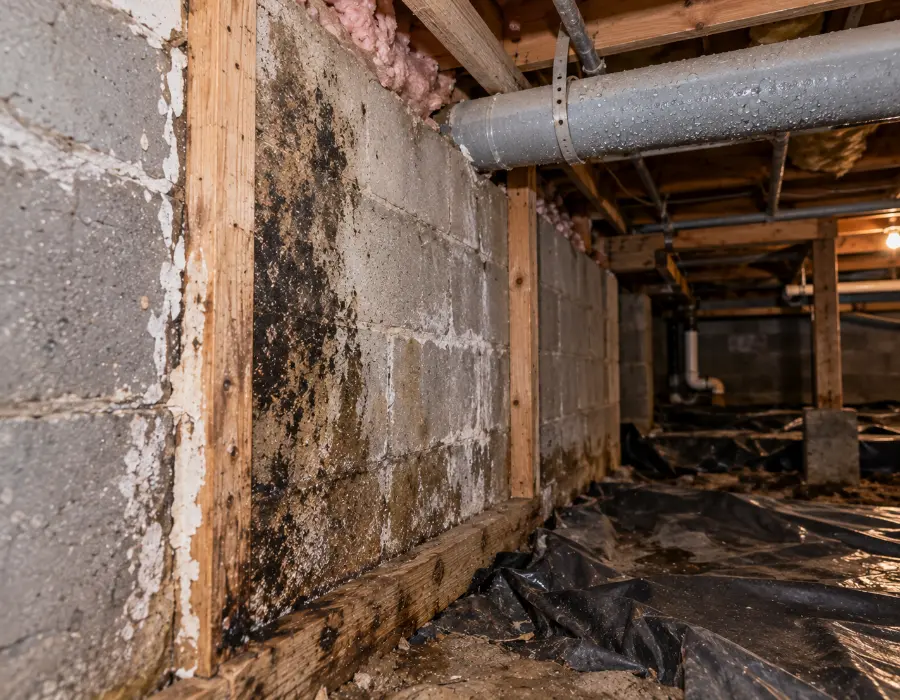
- Visible spots or growth on building materials such as walls, framing, insulation, or subflooring
- Efflorescence, a white, powdery, salt-like deposit on block or concrete walls, which can indicate moisture moving through the material even though the deposit itself is not mold
- Peeling paint, bubbling paint, or recurring discoloration on basement walls
- A crawl space vapor barrier that appears torn, displaced, or missing in sections
- Condensation that repeatedly forms on pipes, windows, or other cool surfaces
- Elevated humidity in the basement or nearby rooms
- Past water damage that was not fully dried and corrected
Health symptoms can have many possible causes. Damp and moldy environments may be associated with respiratory or allergy-related symptoms in some people, particularly those with asthma, allergies, or other respiratory sensitivities. If you have health concerns, speak with a qualified healthcare professional.
How the work is approached
Our Approach to Basement and Crawl Space Mold Problems
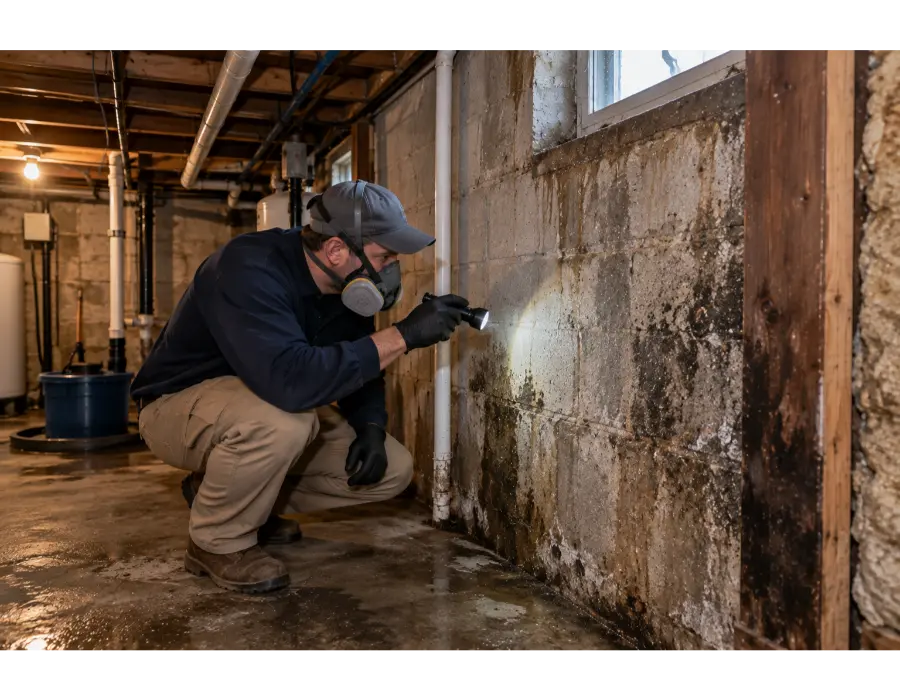
Moisture source investigation
Before remediation work begins, the moisture conditions contributing to the problem need to be identified. Removing visible mold without correcting the water or humidity problem can allow growth to return.
Assessment and scope of work
Where New York’s mold licensing requirements apply, the project follows the applicable Article 32 requirements, including the required relationship between mold assessment and remediation professionals. A proper scope helps define what work is actually needed.
Containment
When appropriate for the scope of work, the affected area may be isolated to help reduce the spread of dust and mold debris into unaffected areas during remediation.
Removal or cleaning of contaminated materials
Materials are addressed according to their condition and the scope of the project. Some porous materials may need to be removed and replaced, while certain structural or non-porous materials may be cleaned when appropriate.
Treatment and cleaning
Remaining surfaces are cleaned and addressed using methods and products appropriate to the material and remediation plan.
Moisture control recommendations
Depending on the cause, next steps may involve plumbing repair, drainage improvements, sump pump service, foundation repair, vapor barrier improvements, dehumidification, or another moisture control measure.
Post-remediation assessment or verification
When required or appropriate for the project, post-remediation assessment or other verification may be performed in accordance with the applicable scope and New York requirements.
Long-term moisture control
Crawl Space Encapsulation
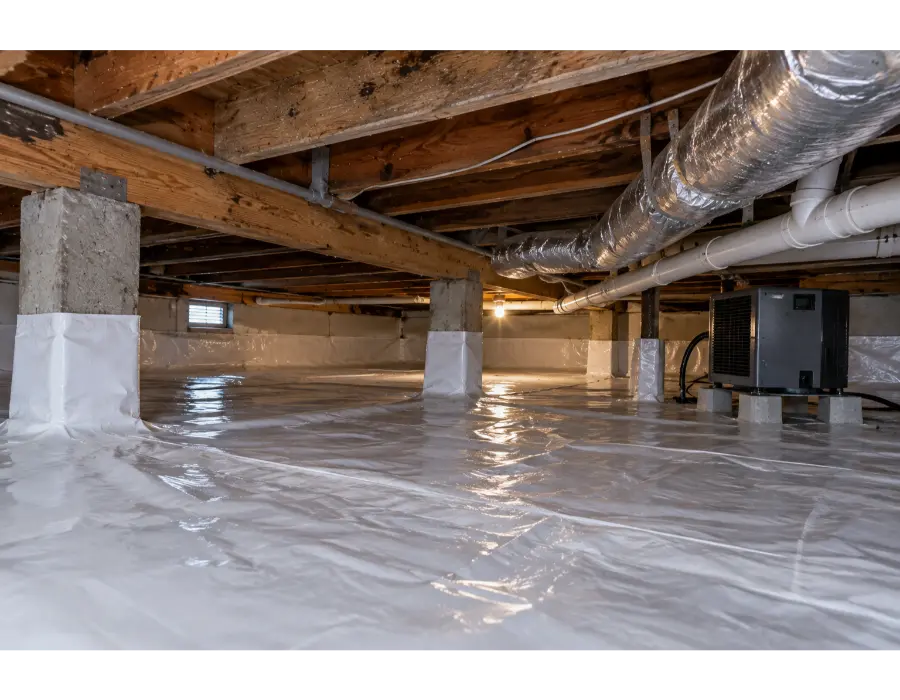
For crawl spaces with recurring moisture problems rather than a one time water event, encapsulation may be one option for controlling moisture. Depending on the property and moisture source, this can involve a vapor barrier across the ground and portions of the crawl space, improvements to drainage, sealing selected openings, and dehumidification.
Encapsulation is not automatically necessary for every crawl space mold problem. The appropriate solution depends on where the moisture is coming from. If the problem resulted from a one time plumbing leak that has been repaired, a different approach may be appropriate. When moisture repeatedly enters the crawl space or humidity remains consistently elevated, long term moisture control may be necessary in addition to mold remediation.
Project cost
How Much Does Basement or Crawl Space Mold Removal Cost?
Basement Crawl Space Mold Removal Inwood can involve significantly different costs, since these spaces can involve large affected areas, difficult access, moisture control work, damaged building materials, containment, and follow up work.
A small, isolated area may cost substantially less than a full basement or crawl space project. Larger projects involving widespread water damage, significant material removal, extensive containment, or separate moisture control improvements can cost considerably more.
National mold remediation estimates are sometimes quoted in the approximate $1,200 to $3,750 range for residential projects, but that range should not be treated as a local quote for an Inwood property. Basement flooding, crawl space conditions, the size of the affected area, accessibility, damaged materials, and the moisture source can all substantially change the final cost. For a project subject to New York Article 32, the applicable assessment and remediation requirements should be followed when determining scope and cost.
Frequently asked questions
Frequently Asked Questions
Is basement mold dangerous?
Mold in a basement should be addressed because indoor mold growth indicates a moisture problem that needs to be corrected. Damp and moldy environments may affect indoor air quality, and some people, including those with asthma, mold allergies, immune suppression, or certain respiratory conditions, may be more sensitive to exposure. If you have specific health concerns, speak with a healthcare professional.
What is the white powdery substance on my basement wall? Is it mold?
It may be efflorescence, a salt-like deposit that can appear when moisture moves through concrete or masonry. Efflorescence is not mold itself, but it can indicate that moisture is moving through the wall. The moisture source should be evaluated, especially if there are also signs of mold or water damage nearby.
Do I need to encapsulate my crawl space, or is mold removal enough?
It depends on what caused the mold. If the problem resulted from a one time water event that has been fully corrected, remediation and drying may be enough. If the crawl space has recurring moisture from soil moisture, drainage problems, repeated water intrusion, or consistently elevated humidity, longer term moisture control measures such as vapor barrier improvements, drainage, or encapsulation may be considered.
Can I just paint over basement mold?
Painting over a mold affected surface does not correct the underlying moisture problem or remove contamination from porous materials. The appropriate response is to address the moisture source and remediate affected materials according to their condition and the scope of the project.
How do I know if my sump pump contributed to the mold?
A sump pump problem may have contributed if the basement experienced water accumulation after the pump failed, lost power, became overwhelmed, or did not operate correctly. Signs of past water intrusion, standing water, water marks, or recurring dampness near the sump area can also provide useful information. The pump and the overall drainage conditions should be evaluated as part of identifying the moisture source.
Can mold grow in a crawl space without standing water?
Yes. Mold can grow when building materials remain damp or when humidity stays elevated. A crawl space does not need visible standing water for condensation, soil moisture, air leakage, or recurring damp conditions to create an environment that supports mold growth.
Why does my basement smell musty even when I cannot see mold?
A musty odor can be associated with dampness or hidden mold growth, but an odor alone does not identify the exact cause. Moisture can be present behind finished walls, under flooring, around plumbing, or in other concealed areas. A proper evaluation focuses on finding the source of moisture rather than assuming the cause based on odor alone.
Can I clean basement mold myself?
The appropriate approach depends on the size of the affected area, the material involved, and who may be exposed during cleanup. Cleaning mold can present health and injury risks, and people with asthma, allergies, immune suppression, or certain respiratory conditions may be more vulnerable during mold cleanup.
Local mold help
Basement and crawl space mold removal for Inwood and the Five Towns
Basement and crawl space mold removal is one of the specialized services within our broader mold remediation process. For storm, flooding, and water damage situations, see our water damage and post-flood mold remediation page. This service is available across Inwood, NY and the Five Towns.