
Black Mold Removal • Inwood, NY
Black Mold Removal Inwood, NY
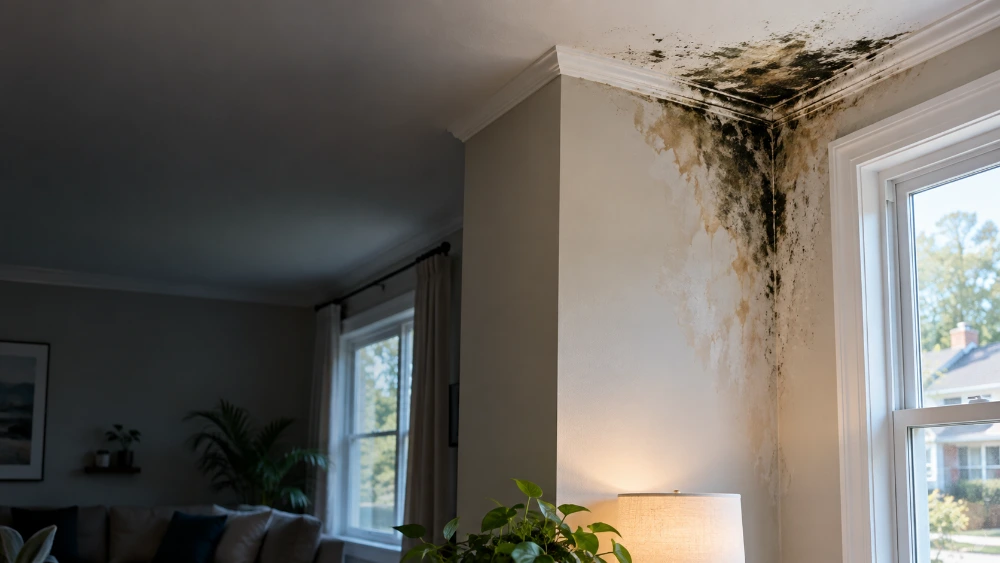
Black mold removal addresses Stachybotrys chartarum and other dark colored molds found in Inwood homes, identified through professional assessment rather than appearance alone. Color does not confirm species; laboratory analysis of a sample is needed when species-level identification is actually required.
Serving Inwood and the Five Towns
Same day response when available
Understanding Black Mold
What “Black Mold” Actually Means
“Black mold” is a common term, not a single species. Most often it refers to Stachybotrys chartarum, a greenish black mold that grows on materials with high cellulose content and low nitrogen, such as drywall paper, ceiling tiles, fiberboard, and paper products. Unlike molds that can establish themselves after a quick 24 to 48 hour wetting, Stachybotrys generally needs constant, sustained moisture over a longer period to take hold, which is why it tends to show up in areas with a chronic, ongoing leak rather than a single fast flood event.
In Inwood, that usually means a slow roof leak, persistent window condensation through the winter, a chronically damp crawl space, or a basement that took on water during a past storm and never fully dried out. The CDC notes that Stachybotrys requires constant moisture from sources like water damage, leaks, condensation, or flooding, so finding it in a home is a reliable sign of an ongoing moisture problem, not just a one time event.
Appearance Isn’t Identification
Not Every Dark Mold Is “Toxic Black Mold”
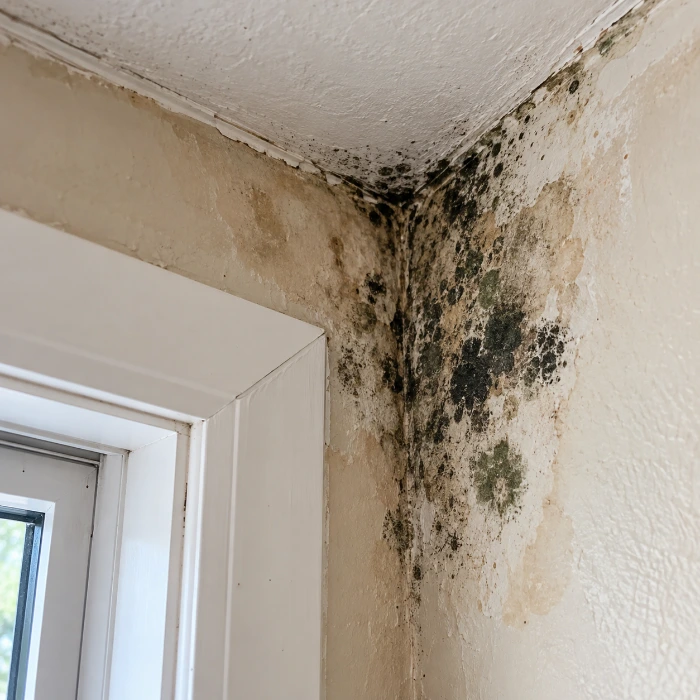
A large share of what people call black mold is not Stachybotrys at all. Several common indoor species, including some strains of Aspergillus, can also appear dark or black. The mold commonly found in bathroom grout and between tile, for example, is usually not Stachybotrys. Color alone cannot tell you what you are dealing with, which is exactly why professional identification matters more here than with most other mold concerns.
The Science Behind the Reputation
Where the “Toxic Mold” Reputation Came From
The term “toxic black mold” traces back largely to a cluster of infant pulmonary hemorrhage cases investigated in Cleveland in the 1990s, which received significant media coverage at the time. On review, the original research was found to have possible bias in sampling and diagnosis, and the CDC’s position has been that a contribution from Stachybotrys in those cases could not be entirely excluded, but was also never proven. That distinction matters. The reputation spread further than the evidence did.
The CDC’s current guidance states plainly that it is not necessary to determine which specific type of mold is present in a home, and that all molds should be treated the same with respect to potential health risk and removal. In other words, whether a professional identifies Stachybotrys or a different species, the appropriate response looks similar: find the moisture source, remove the contamination, and dry the area.
Health Considerations
Health Considerations
Reported reactions to Stachybotrys and other molds are generally allergic or respiratory in nature and vary from person to person, including symptoms like nasal or sinus irritation, coughing, and skin irritation. People with asthma, mold allergies, or weakened immune systems are generally more sensitive to mold exposure of any kind. There is no federal regulatory limit for indoor Stachybotrys spore counts, since dose response varies significantly between individuals. If you have specific health concerns related to mold exposure, speak with a healthcare professional rather than relying on the presence or absence of a specific species to judge risk.
New York Requirements
New York Black Mold Removal Inwood Requirements
New York State regulates covered mold assessment and remediation work under Labor Law Article 32. When a project falls within those requirements, homeowners should verify that professionals performing the covered work hold the appropriate New York license.

Service Scope
Black Mold Removal in Inwood
For general mold problems, see our mold remediation page. For basement or crawl-space-specific moisture and mold issues, see basement and crawl space mold removal. This page is specifically for concerns about black or dark mold and Stachybotrys. This service is available across Inwood, NY and the Five Towns.
Remediation Process
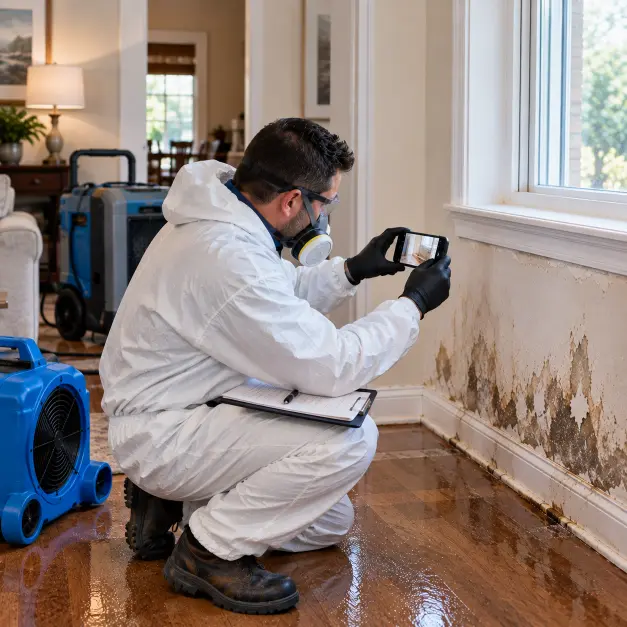
How Black Mold Is Identified and Removed
1
Visual assessment.
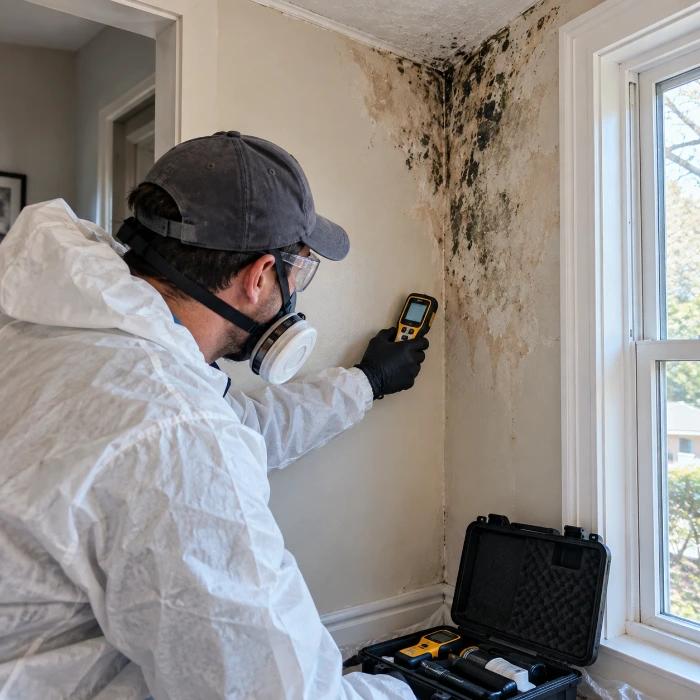
A professional looks at the growth pattern, material affected, and moisture conditions, without assuming species from color.
2
Lab identification when appropriate.
Samples can be sent to an independent lab to confirm species, useful for documentation and for ruling in or out specific concerns.
3
Moisture source investigation.
Since Stachybotrys requires sustained moisture, this step usually matters more here than with a fast, single water event.
4
Containment.
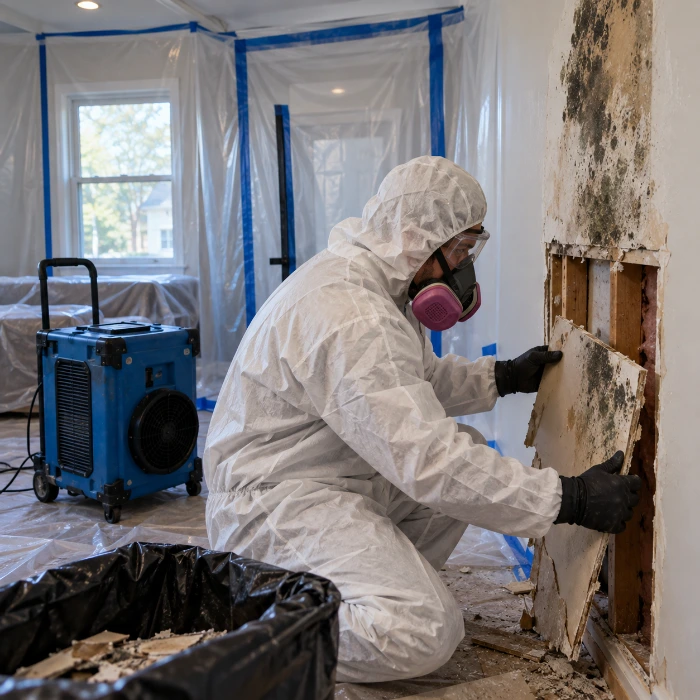
The work area is isolated before disturbing any dried mold growth, since this is when spores are most likely to become airborne.
5
Removal of contaminated material.
Porous materials with visible growth, such as drywall or ceiling tile, are generally removed rather than cleaned in place.
6
Treatment and drying
of the remaining structure.
7
Moisture correction
addressing whatever chronic condition allowed the mold to establish itself in the first place.
Frequently Asked Questions
Frequently Asked Questions
If visible dark mold is extensive, recurring, or associated with a persistent moisture problem, professional remediation may be appropriate. The priority is to identify and correct the moisture source before contaminated materials are removed.
Is black mold more dangerous than other types of mold?
Not necessarily. The CDC’s position is that all mold should be treated similarly with respect to health risk and removal, regardless of species. Reported symptoms across mold types are generally allergic or respiratory, and severity depends more on individual sensitivity and exposure level than on color.
How do I know if my mold is actually Stachybotrys?
Appearance alone cannot confirm it. Lab testing of a sample is the only way to positively identify the species.
Why does black mold show up in some rooms but not others?
Stachybotrys typically needs sustained, ongoing moisture rather than a brief wetting, so it tends to appear where a chronic leak, persistent condensation, or long term dampness has gone unaddressed, rather than spreading evenly through a home.
Can black mold come back after removal?
Yes, if the underlying moisture source is not corrected. Since this species needs constant moisture to establish itself, removing the mold without fixing the leak or humidity problem behind it usually means it returns.
Should I test for black mold before removal?
Testing can be useful for identification and documentation, but the CDC notes it is not strictly necessary to determine species before addressing visible mold, since remediation approaches are broadly similar across mold types.
Is it safe to stay in my home with black mold present?
This depends on the extent of the growth and individual health factors. If you or a family member has respiratory conditions, allergies, or other health concerns, speak with a healthcare professional about your specific situation.
Concerned About Dark Mold?
Call now to discuss black mold removal.
Tell us what you are seeing, where it is located, and whether there is an ongoing moisture problem, and we will walk you through the next step.