

Emergency Service • Inwood, NY
Emergency Mold Removal Inwood, NY
Emergency mold removal is needed after flooding, burst pipes, sewage backups, or sudden water damage. In Inwood, storm surge from Jamaica Bay and failed sump pumps can also cause urgent moisture problems. Quick action to stop the water and dry affected areas helps reduce the risk of mold growth. Identifying water contamination is also essential to determine the right cleanup approach.
Serving Inwood and the Five Towns
Response time depends on current availability
Recognizing an Emergency
When Do You Need Emergency Mold Removal Inwood?
Emergency Mold Removal Inwood is appropriate when sudden water damage creates conditions that need a fast response rather than a scheduled visit. Not every mold sighting is an emergency, but certain situations call for one:
- A burst or leaking pipe that has released standing water
- A sewage backup or overflowing toilet
- Storm surge or flood water that entered a basement or crawl space
- A failed sump pump during active rain or snowmelt
- A washing machine, dishwasher, or water heater failure that flooded a room
- Any water intrusion where the source has not yet been identified or stopped
If the water happened in the last 48 hours, treat it as time sensitive. Past that window, standard scheduling is usually appropriate instead.
Why Speed Matters
Why Timing Matters After Water Damage
The EPA recommends drying water-damaged areas and materials within 24 to 48 hours to help prevent mold growth. This is not an exact countdown for every situation, since temperature, humidity, airflow, and the amount of water all affect how quickly conditions become favorable for growth. But it is a useful general target: the faster a wet area is dried, the less likely mold becomes.
This matters more in Inwood than in many places, given how often local water events involve storm surge or coastal flooding rather than a single contained leak. A basement affected by Jamaica Bay storm surge, like the flooding recorded during Hurricane Sandy, involves more water across a larger area than a typical indoor pipe break, which can extend drying time well past that initial 24 to 48 hour window unless equipment and effort are scaled to match.

Water Categories
Not All Water Is the Same
Professional water damage restoration follows a classification system from the IICRC S500 standard, which separates water into three categories based on contamination level, not just how much water there is. This matters because it changes what can be dried and saved versus what has to be removed.
Category 1, Clean Water
Water from a sanitary source, such as a broken supply line or a clean overflow. Lower risk, but still time sensitive, since clean water sitting on porous material can become contaminated within a day or two.
Category 2, Gray Water
Water with meaningful contamination, such as washing machine or dishwasher overflow, or water that has been sitting long enough to pick up contaminants. This typically calls for more caution and antimicrobial treatment.
Category 3, Black Water
Grossly contaminated water, including sewage backup and flood water that has contacted the ground, storm drains, or standing outdoor water. This category calls for stricter protective equipment and, in most cases, removal of affected porous materials rather than drying and saving them.
Flood or storm water that has contacted sewage, soil, storm drains, or other contaminated sources is generally treated as Category 3 water, which is one reason flood-related jobs often involve more material removal than a typical indoor pipe leak.
Before Help Arrives
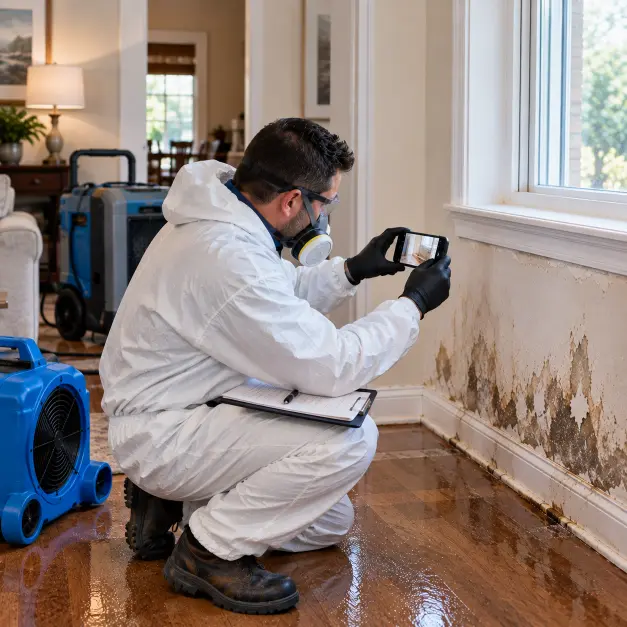
What To Do While Waiting for Help
- If it is safe to do so, shut off the water source, whether that is a supply valve, the main water shutoff, or the appliance involved
- Do not enter a flooded basement if there is any chance electrical outlets or a panel are submerged or in contact with water
- Move furniture, rugs, and belongings away from standing water where it is safe to do so
- Avoid running fans or HVAC systems through an area affected by sewage or flood water, since this can spread contamination through the air
- Take photos of the damage before cleanup begins, useful for insurance documentation
- Do not wait to see if a musty smell develops before calling. By the time it is noticeable, conditions for mold growth are often already present
The Emergency Call
What Happens During an Emergency Call
1
Describe the situation
What happened, when it happened, and whether the water source has been stopped.
2
Initial guidance
Immediate safety steps can be discussed over the phone before anyone arrives.
3
Response scheduling
Timing depends on current availability and the nature of the emergency.
4
On site assessment
The water category, affected materials, and scope of the problem are evaluated in person.
5
Extraction or remediation
Whether the immediate need is water removal, drying equipment, or mold remediation depends on how much time has passed and what the assessment finds.
6
Documentation
A written scope, useful for your records and for any insurance claim tied to the event.
Insurance
Insurance and Emergency Water Damage
Homeowners insurance in New York typically responds to sudden, accidental events, a burst pipe or an appliance failure being common examples, though coverage always depends on the specific policy. Flood related emergencies, including storm surge from Jamaica Bay, often fall under a separate flood insurance policy rather than a standard homeowners policy. Acting quickly and documenting the damage with photos and a written scope can matter for how a claim is processed, but you should confirm your specific coverage directly with your insurance provider rather than assume based on the cause alone.

Frequently Asked Questions
Common Questions About Emergency Mold Removal
Is emergency mold removal different from regular mold remediation?
Emergency service usually starts with water extraction and drying rather than mold removal itself, since the mold may not have developed yet. If enough time has passed for growth to start, mold remediation becomes part of the response alongside drying and repair.
How fast should I call after water damage?
As soon as possible, ideally within the first 24 hours. The EPA’s general guidance points to a 24 to 48 hour window before mold growth becomes likely on wet porous materials, so faster action gives a better chance of avoiding it entirely.
Do I need emergency service for a small leak?
Not necessarily. A small, contained leak on a hard surface that gets dried quickly on your own may not need emergency response. Standing water, flooding, sewage backup, or a leak affecting drywall, insulation, or flooring generally does.
Is storm or flood water more dangerous than a pipe leak?
Generally, yes. Under the IICRC S500 classification, flood and storm surge water is typically treated as more heavily contaminated than a clean supply line leak, which usually means more protective equipment and more material removal rather than drying and saving what got wet.
Will emergency response be available overnight or on weekends?
Availability depends on current staffing and demand. Call to confirm current response times rather than assuming a specific timeframe.
Does insurance cover emergency water extraction?
Often, if the cause was sudden and accidental, such as a burst pipe. Flood related water damage typically requires separate flood insurance. Confirm your specific coverage with your provider.
Emergency response is often the first step after a recent water event. If mold remediation is needed after the immediate emergency, see our mold remediation page. For broader storm and flood cleanup, see our water damage and post-flood mold remediation page. For a flooded basement or crawl space, see our basement and crawl space mold removal page. This service is available across Inwood, NY and the Five Towns.
Water Damage Right Now?
Call now for emergency mold help.
Tell us what happened, a leak, flooding, a sewage backup, or another water emergency, and we will walk you through the next step.