

Attic Mold Remediation • Inwood, NY
Attic Mold Remediation in Inwood, NY
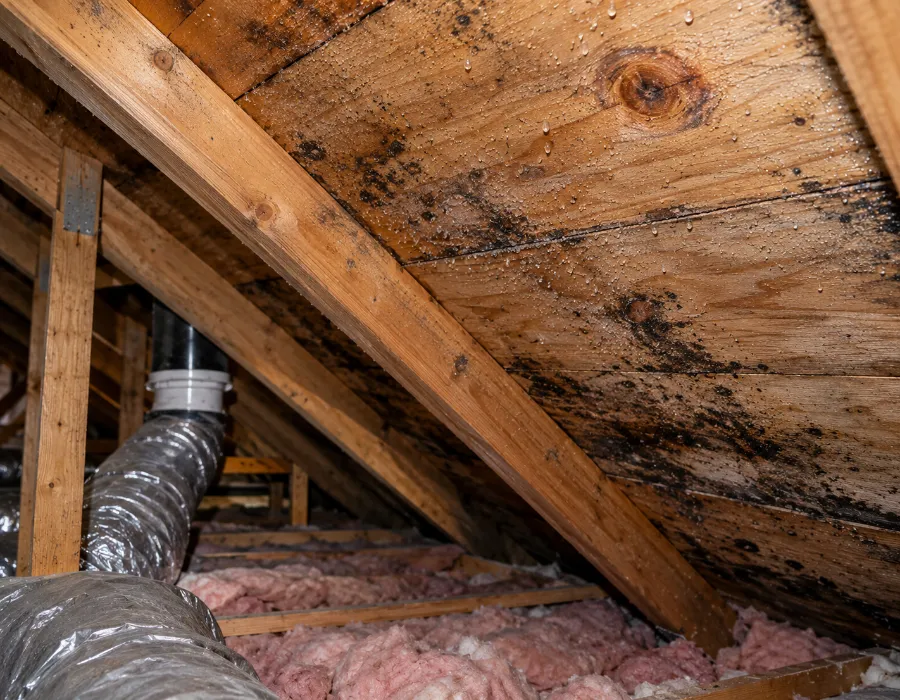
Attic mold usually comes from trapped moisture and poor ventilation, not flooding or groundwater. Warm, humid air from inside the home rises into the attic and condenses on the cold underside of the roof, and that condensation, not a leak, is the most common cause found during inspection.
Serving Inwood and the Five Towns
Same day response when available
Attic vs. Basement Moisture
Why Attics Grow Mold Differently Than Basements
Attic Mold Remediation Inwood addresses a different moisture pattern than basement problems. Basement moisture in Inwood is usually tied to groundwater, the water table, or storm flooding. Attics work almost the opposite way. Warm, moisture laden air from bathrooms, kitchens, and living spaces rises through the house and reaches the coldest surface it can find, typically the underside of the roof deck in winter. When that warm air meets the cold roof sheathing, the moisture condenses directly onto the wood, and repeated condensation cycles through a cold season create exactly the sustained dampness mold needs.
This means an attic can develop a serious mold problem without any storm, leak, or flood involved at all. Long Island winters get cold enough for this condensation cycle to happen repeatedly across a season, particularly in older Inwood homes where insulation and ventilation may not match current standards.
Common Causes
Common Causes of Attic Mold
Bathroom or kitchen exhaust fans vented into the attic instead of outside. This is a common cause of attic moisture problems. A fan that should carry moist air outside the home instead dumps it directly into the attic, creating a concentrated moisture source right at the point of failure.
Blocked or insufficient soffit and ridge ventilation. Attics need a balance of intake air at the soffits and exhaust at the ridge or roof. Insulation stuffed into soffit vents, a common installation mistake, blocks that intake and raises attic temperature and humidity.
Mixed ventilation types working against each other. Poorly configured or competing vent types can disrupt the intended airflow through an attic. For example, adding exhaust vents without considering the overall ventilation design can reduce how effectively the system moves air.
Roof leaks, including damaged or missing shingles, deteriorated flashing around chimneys and vent penetrations, and general wear near the end of a roof’s service life.
Ice dams. When attic heat loss melts snow on the upper roof while the eaves stay cold, the meltwater refreezes at the edge and can back up under shingles, driving water into the attic space during winter thaws.
Missing or inadequate attic insulation, which allows more conditioned air to escape upward and increases the moisture load the ventilation system has to handle.
Warning Signs
Signs of an Attic Ventilation or Moisture Problem
- Frost or visible moisture on the underside of the roof sheathing during cold weather
- Musty odors near the attic access hatch or in upper floor rooms
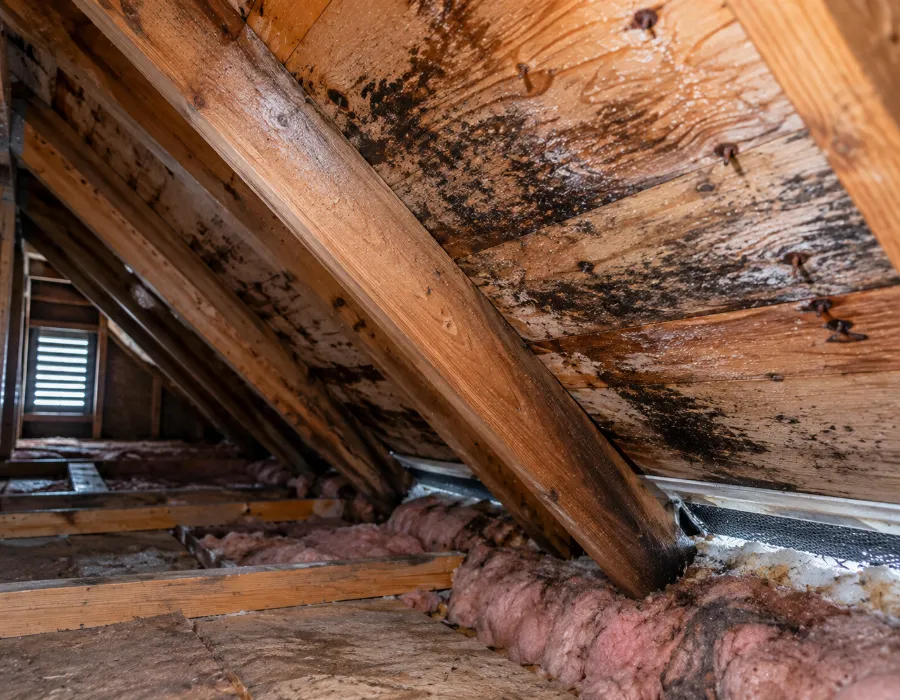
- Dark staining on rafters, sheathing, or other wood framing
- Compressed, damp, or discolored insulation, especially near the roof edges
- Ice dams forming at the roof edge during winter
- Rusted nail heads visible from inside the attic, often an early sign of chronic condensation
- Peeling paint or staining on ceilings directly below the attic
Attics are rarely visited spaces, which is part of why problems here often go unnoticed longer than mold in a basement or bathroom. Many attic mold cases are first discovered during a home inspection, a re-roofing project, or an insulation upgrade rather than by the homeowner directly.
Indoor Air & Home Impact
How Attic Mold Can Affect the Rest of the Home
Even though an attic is not living space, it is rarely fully sealed off from the rooms below. Gaps around light fixtures, attic access hatches, and ductwork running through the attic can allow attic air, and the spores in it, to move into occupied rooms, particularly when household air pressure pulls attic air downward. This is one reason attic mold is still worth addressing even though people do not spend time in the space itself.

Remediation Process
Our Approach to Attic Mold Remediation Inwood
1
Inspection of ventilation and insulation
checking soffit intake, ridge or roof exhaust, and whether the two are balanced and functioning as designed.
2
Moisture source identification
distinguishing between condensation driven growth, a roof leak, and a mis-vented exhaust fan, since each calls for a different fix.
3
Containment
appropriate to the scope of the affected area.
4
Removal of contaminated material
which in an attic often means moldy sheathing, rafters, or insulation that cannot be adequately cleaned.
5
Treatment
of salvageable wood framing and structure.
6
Ventilation and moisture correction
which may involve rerouting an exhaust fan to vent properly outside, clearing blocked soffit vents, adding or rebalancing ridge ventilation, or repairing roof leaks, generally coordinated with a roofing or insulation contractor as needed.
7
Post-remediation assessment
when appropriate for the scope of the project.
For mold assessment or remediation work covered by New York State Article 32, homeowners should verify that the professional holds the appropriate NYS mold license.
Common Questions
Frequently Asked Questions
Can attic mold happen without a roof leak?
Yes, and it often does. Condensation from trapped, humid indoor air meeting a cold roof deck is one of the most common causes of attic mold, independent of any actual leak.
How do I know if my bathroom fan is vented correctly?
From inside the attic, the exhaust duct should run all the way to an exterior vent, not simply end partway or open directly into the attic space. If you are not comfortable checking this yourself, a professional inspection can confirm it.
Are ice dams a mold problem or a roofing problem?
Both, in a sense. Ice dams are usually a sign of heat escaping into the attic due to inadequate insulation or ventilation, and if they cause water intrusion, that moisture can lead directly to mold in the affected area.
Does attic mold affect indoor air quality if no one goes up there?
It can. Gaps around fixtures, access hatches, and ductwork can allow attic air to move into living spaces below, so an attic problem is not necessarily contained to the attic itself.
Will fixing the ventilation stop attic mold from coming back?
Correcting the moisture source, whether that is ventilation, a mis-vented fan, or a roof leak, is generally necessary for remediation to hold. Removing mold without addressing why the attic was damp in the first place often means it returns.
Do I need a roofer or a mold remediation company for attic mold?
Often both. Mold remediation addresses the contamination itself, while correcting a roof leak, mis-vented fan, or ventilation imbalance may require a roofing or insulation contractor, and the two are frequently coordinated on the same project.
For a broader look at the mold remediation process, see our Mold Remediation page. If you are unsure whether what you are seeing needs testing, see Mold Inspection and Testing. This service is available across Inwood, NY and the Five Towns.
Local Attic Mold Help