

Bathroom & Kitchen Mold • Inwood, NY
Bathroom and Kitchen Mold Removal in Inwood, NY
Bathroom and kitchen mold often develops from repeated moisture exposure rather than a single event. Shower steam, sink use, cooking, and appliance-related moisture can create repeated moisture events rather than one ongoing source. Failed caulk, cracked grout, and worn plumbing seals are common points where that moisture finds its way into places it should not reach.
Serving Inwood and the Five Towns
Same day response when available
Bathroom & Kitchen Mold
Why These Rooms Are Different From the Rest of the House
Bathroom Kitchen Mold Removal Inwood is especially important in these areas because most rooms in a home stay dry most of the time. Bathrooms and kitchens do not. Every shower, bath, and load of dishes sends a burst of humidity into the room, and that cycle repeats multiple times a day, every day. The materials in these rooms, tile, grout, caulk, and cabinetry, are built to handle that, but only as long as those seals stay intact. Once one fails, water starts reaching wood, drywall, and subfloor that were never meant to get wet, and that is when mold becomes a realistic problem rather than just surface condensation.

Grout & Caulk
Grout and Caulk: A Distinction Worth Understanding
Grout and caulk are not interchangeable, and using the wrong one in the wrong place is a common source of hidden water damage. Grout is rigid and belongs between tiles on the same flat plane. Caulk is flexible and belongs anywhere the surface changes direction, corners, where tile meets a tub, or where tile meets the floor. Rigid grout used in a spot that needs to flex will crack within a relatively short time, since it cannot handle the tiny amount of movement a house naturally has. Once that seal opens, water reaches the wall cavity or subfloor behind it with every shower, whether or not it is visible from the room.
Caulk itself also fails gradually. Silicone caulk can pull away from tile well before it looks obviously cracked or damaged, which is why replacing it when it begins to pull away, crack, or lose its seal can help prevent water from getting behind the surface for months.
Bathroom Mold Sources
Common Sources of Bathroom Mold
Failed caulk or grout around a tub, shower, or shower pan
allowing water behind the tile assembly with regular use
A worn or improperly seated toilet wax ring
which can leak slowly at the base with every flush and go unnoticed for weeks while it affects the subfloor underneath
Supply line or shutoff valve leaks under a sink
often first noticed as dampness or staining inside the cabinet rather than a visible puddle
Condensation on a cold bathroom window
during and after a shower, similar in principle to condensation elsewhere in a home, but concentrated by the room’s regular humidity spikes
An undersized or underused exhaust fan
one that cannot clear the room’s humidity quickly enough, or one that is simply not run long enough after a shower to matter
Kitchen Mold Sources
Common Sources of Kitchen Mold
Dishwasher supply line or drain hose leaks
often hidden behind the appliance or under the cabinet it sits in
Refrigerator water line leaks
relevant for units with an ice maker or water dispenser, and easy to miss since the line often runs behind the unit
Sink rim and faucet base leaks
which can seep under the counter edge and slowly affect cabinetry below
Under-sink drain connection leaks
similar in nature to the bathroom version but generally involving more frequent use given typical kitchen sink activity
Warning Signs
Warning Signs Worth Checking for Bathroom Kitchen Mold Removal Inwood
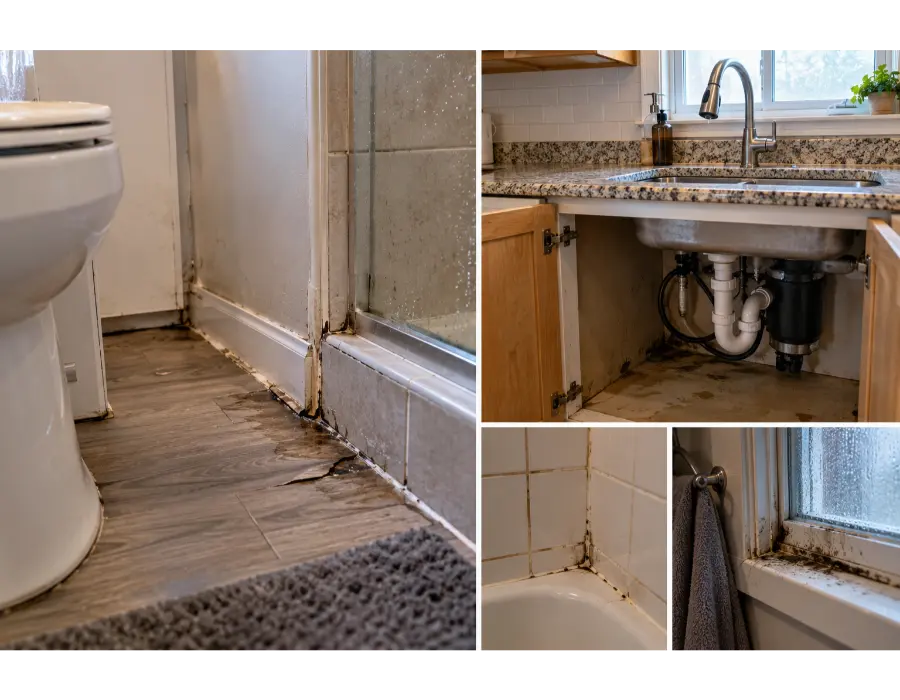
- Soft or spongy flooring near a tub, shower, toilet, or sink
- Curling vinyl or loosening tile next to a tub or shower
- Water stains on a ceiling directly below a bathroom or kitchen
- Discoloration along grout lines or where caulk meets tile
- A toilet that rocks or shifts slightly when you sit on it, which can indicate a loose mounting connection or a compromised seal
- Puddling, staining, or a musty smell inside a cabinet under a sink
- A persistent musty smell that does not go away with normal cleaning
Remediation Process
Our Approach
Source identification.
Since bathrooms and kitchens have several possible failure points, confirming which one is actually responsible, caulk, grout, a wax ring, a supply line, or ventilation, matters before anything else.
Assessment of affected material.
Subfloor, wall cavity, and cabinetry behind the fixture are checked for the extent of moisture intrusion, not just the visible surface.
Containment
appropriate to the scope of the affected area.
Removal of contaminated material.
Water damaged subfloor, drywall, or cabinetry that cannot be adequately cleaned is generally removed rather than treated in place.
Treatment
of salvageable structural material.
Correcting the source,
which may mean resealing tile and grout correctly, replacing a wax ring, repairing a supply line, or addressing inadequate ventilation, generally coordinated with a plumber or other trade as needed.
Post-remediation assessment,
when appropriate for the scope of the project.
For mold assessment or remediation work covered by New York State Article 32, homeowners should verify that the professional holds the appropriate NYS mold license.
Frequently Asked Questions
Frequently Asked Questions
Can I just recaulk over mold instead of having it remediated?
No. Caulking over existing mold traps it rather than removing it, and does nothing for contamination that has already reached the wall cavity or subfloor behind the surface.
How do I know if my toilet’s wax ring has failed?
A toilet that rocks or shifts when you sit on it can indicate a loose mounting connection or a compromised seal. Staining, a persistent odor near the base, or soft flooring around the toilet are other indicators worth checking.
Is it normal for bathroom caulk to need replacing every couple of years?
Yes. Caulk is a wear item, not a permanent seal. Replacing it before it visibly fails is generally far less expensive than repairing the water damage that follows a delay.
My kitchen cabinet under the sink smells musty but I don’t see mold. What should I check?
Supply lines, the drain connection, and the dishwasher’s hose and connections are the most common hidden sources. A musty smell without visible growth often means moisture is present but not yet obviously visible.
Does a bathroom exhaust fan actually make a difference?
Yes. A fan that is properly sized for the room and run during and for a period after a shower helps clear humidity before it has a chance to settle into grout, caulk, or drywall repeatedly over time.
Is mold behind tile more serious than surface mold?
It generally involves more extensive repair, since reaching it typically means removing tile, drywall, or subfloor rather than simply cleaning a visible surface, but the health considerations are similar to mold found elsewhere in a home.
For mold connected to plumbing failures or larger water events, see our Water Damage and Post-Flood Mold Remediation page. For the general remediation process, see Mold Remediation. For mold assessment or remediation work covered by New York State Article 32, homeowners should verify that the professional holds the appropriate NYS mold license. This service is available across Inwood, NY and the Five Towns.
Local Mold Help