

Call for Mold Remediation
Mold Remediation Inwood, NY
Mold remediation in Inwood is the regulated process of assessing, containing, removing, and verifying the correction of mold contamination in a home or building. In New York, projects above a certain size are governed by specific legal requirements, not just industry best practice.
Serving Inwood and the Five Towns
Same day response when available
NYS Mold Law • Article 32
The 10 Square Foot Threshold Under NYS Article 32
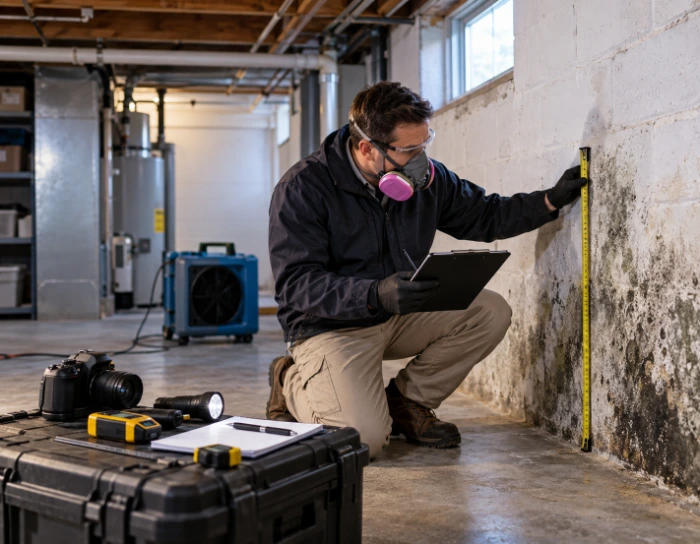
New York’s Mold Law, Labor Law Article 32, sets a specific size threshold that determines when licensing requirements apply. For mold contamination larger than 10 square feet, the law requires the applicable licensed mold professionals to follow the assessment and remediation requirements, including a written mold remediation work plan before covered remediation work begins. That work must then be carried out by a separately licensed mold remediation contractor, who is required to follow the assessor’s plan and cannot deviate from it without the assessor’s approval.
For contamination under that threshold, Article 32’s licensing requirements do not apply to the property owner, although appropriate precautions and safe cleanup practices still matter for smaller areas. Once a project crosses that 10 square foot line, the legal framework changes, and skipping it is not just a quality issue but a compliance one.
Licensing Separation
Why Assessment and Remediation Are Kept Separate
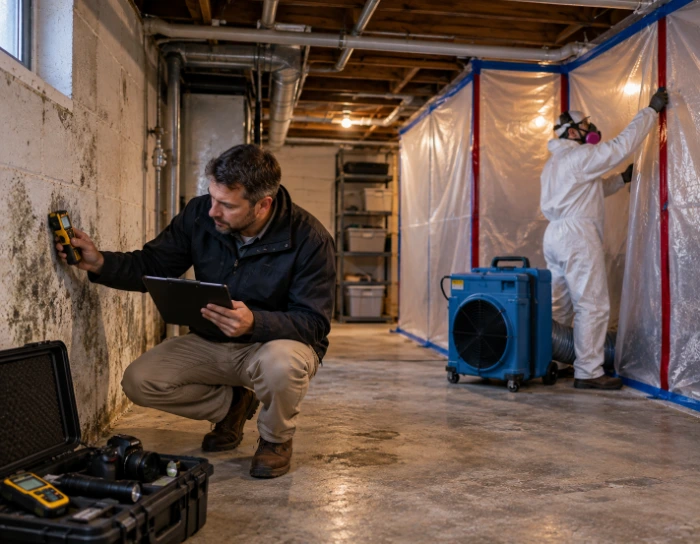
Under Article 32, the mold assessor and the mold remediation contractor must be separately licensed businesses. The assessor inspects the property, determines the scope of contamination, and writes the work plan. The remediation contractor performs the physical work according to that plan. Once remediation is finished, the remediation contractor is not permitted to clear their own work. That final post-remediation assessment has to come from a licensed assessor, generally not the same company that performed the removal.
This structure exists specifically to prevent a conflict of interest, where the company diagnosing the problem also profits from making the job sound bigger than it is, and where the company doing the work also signs off on its own results. A homeowner comparing quotes should expect to see this separation reflected in how a company describes its own process, not just its price.
Work Plan
What a Mold Remediation Inwood Work Plan Actually Covers
The written plan a licensed assessor prepares generally addresses what contaminated materials need to be removed, what cleaning and treatment methods will be used, what containment measures are required for the scope of the job, and what conditions must be met before the project can be considered cleared. Larger or more complex jobs generally call for more detailed containment and protective measures than a small, isolated patch, though exact classification systems vary between agencies and are used as general guidance rather than a single fixed standard.
The Remediation Process
The General Remediation Process
1. Assessment
A licensed assessor inspects the property, determines the extent of contamination, and identifies the moisture source.
2. Written work plan
The assessor documents what needs to happen before any remediation work begins.
3. Containment
The remediation contractor isolates the work area at a level appropriate to the project’s scope, to limit the spread of dust and spores.
4. Removal of contaminated material
Porous materials that cannot be adequately cleaned are removed according to the plan.
5. Cleaning and treatment
Salvageable materials are cleaned and treated with appropriate products.
6. Drying
The area is brought to a normal moisture level before the space is considered complete.
7. Post-remediation assessment
A licensed assessor evaluates whether the work plan’s conditions were met, independent of the contractor who performed the work.
License Verification
Verifying Licensed Mold Professionals
For covered mold work, homeowners can verify a professional’s New York license directly with the New York State Department of Labor rather than relying only on a company’s own claims.

Moisture Control
Moisture Correction Is Part of Remediation, Not an Extra Step
Removing mold without correcting the moisture source behind it is a common way jobs fail to hold up over time. Whether the underlying issue is a roof leak, a plumbing failure, poor grading, or chronic humidity, a remediation plan that does not address the cause is treating a symptom rather than the problem. This applies across property types in Inwood and the Five Towns, from older homes with aging plumbing to newer construction with ventilation issues.
Frequently Asked Questions
Frequently Asked Questions
Do I need a licensed contractor for any amount of mold?
Not legally, under New York’s threshold. Article 32 licensing requirements apply when mold contamination is larger than 10 square feet. Below that, the law does not require a licensed contractor, though following proper precautions still matters for smaller areas.
Can the same company assess and remediate my mold problem?
No, not under New York law for covered projects larger than 10 square feet. The mold assessor and the mold remediation contractor must be separately licensed businesses, and the assessor also handles the final post-remediation evaluation, not the contractor who did the work.
What happens if a contractor skips the written work plan?
Under Article 32, a remediation project of 10 square feet or more is not supposed to begin without one. A contractor willing to skip this step is skipping a legal requirement, not just a formality, which is worth knowing before hiring anyone.
How is the size of a mold problem measured?
Generally by the surface area of visible contamination, not the size of the room. A small patch on one wall is measured differently than contamination spread across an entire basement.
Does mold remediation include fixing the leak or moisture source?
Typically, mold remediation itself focuses on the contamination and structure, while identifying and directing repair of the moisture source is usually part of a proper plan, even if the physical repair, such as plumbing or roofing work, may involve a separate trade.
How do I confirm a company’s Article 32 license?
Ask for their license number and confirm it directly with the New York State Department of Labor rather than relying on a claim alone.
For specialized mold concerns, see Black Mold Removal. For flood-related recovery, see Water Damage and Post-Flood Mold Remediation. For basement or crawl-space-specific problems, see Basement and Crawl Space Mold Removal. For a fresh, active water event, see Emergency Mold Removal. This page covers general mold remediation in Inwood and the Five Towns.
Call for Mold Remediation
Mold Remediation in Inwood, NY
Sources referenced: New York State Department of Labor, Labor Law Article 32 (NYS Mold Law), U.S. Environmental Protection Agency (epa.gov), Centers for Disease Control and Prevention (cdc.gov).